
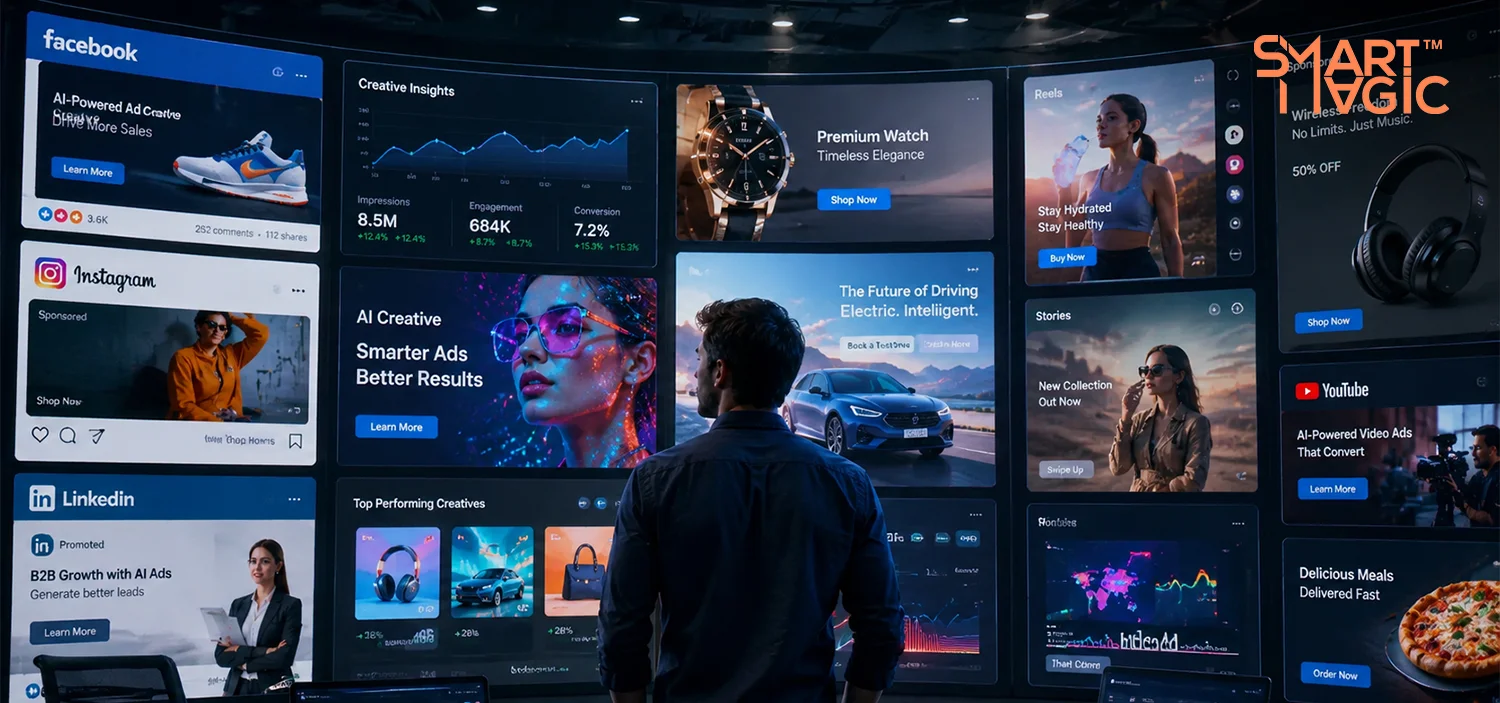
Advertising has always been about reaching the right people. But for decades, brands had to rely on one basic approach. Create an advertisement, put it in front of as many people as possible, and hope that the message connects with a large part of the audience.
Digital advertising changed this to some extent. Brands can now target people based on their interests, location, age and online behaviour. But there is still a major limitation. Even when different people are targeted separately, they often see the same advertisement.
AI is beginning to change that.
With AI, brands can create different versions of the same advertisement for different audiences. The product can remain the same, but the message, visuals, language and tone can change. This is where hyper-personalised advertising comes in.
What Is Hyper-Personalised Advertising?
Hyper-personalised advertising means creating advertising that is more closely matched to the needs and interests of a specific audience. Instead of treating everyone as one large customer group, brands can create different messages for different people.
For example, a home loan company may want to reach a young couple buying their first home. The same company may also want to reach a self-employed person looking to expand their business. Both audiences may be interested in a loan, but their reasons for choosing one are very different.
A traditional advertisement may use one message for both groups. A hyper-personalised campaign can speak to each audience differently. The product stays consistent, while the story around the product changes.
Why Traditional Advertising Struggles With Personalisation
Personalisation sounds simple until you try to do it at scale.
Imagine a brand wants to create five advertisements for five different customer groups. Each group needs a different message. Now add different languages, locations, platforms and formats. A campaign that started as one advertisement can quickly become dozens of creative versions.
Creating all these versions manually takes time. It also requires more scripts, editing, voiceovers, designs and production work. For many brands, the cost becomes difficult to justify.
This is one of the biggest reasons why most advertising has remained relatively broad. Brands may have plenty of audience data, but turning that data into hundreds of useful creative variations has traditionally been difficult.
AI Changes the Way Ads Are Created
AI can help solve part of this problem by making creative production more flexible.
A creative team can start with one central campaign idea. AI can then help adapt that idea for different audiences. The opening of the video can change. The voiceover can change. The visuals can change. Even the call to action can be different.
This does not mean that AI should create every part of an advertisement without human involvement. The creative strategy still needs to come first. AI simply makes it easier to take one strong idea and develop multiple versions from it.
That changes the production process. Instead of creating every advertisement from scratch, brands can build a system where one campaign produces many relevant pieces of content.
One Campaign Can Speak to Different Audiences
Consider a fitness brand launching a new membership plan.
A college student may care about affordability. A working professional may care about convenience. Someone training for a marathon may care about performance and specialised support.
The product is the same.
The motivation is not.
A single advertisement may struggle to speak naturally to all three people. Hyper-personalised advertising allows the brand to change the message depending on the audience.
The student could see an ad focused on affordable access. The professional could see one focused on flexible timings. The runner could see one focused on training and performance.
The campaign remains connected, but each version has a clearer reason to matter to the person watching it.
AI Makes Personalised Video More Practical
Video advertising makes this even more interesting because there are so many elements that can be changed.
A brand can change the opening scene, the voiceover, the text on screen, the product benefit or the final call to action. AI can help create these variations without requiring a completely new production process every time.
For example, a travel brand could promote the same destination to different types of travellers. A young traveller might see a story about adventure and exploration. A family might see a message about comfort and activities for children. A premium traveller might see a completely different version focused on luxury.
The destination has not changed. The advertisement has simply been designed around what matters to that audience.
Personalisation Is Also About Language
In a country as diverse as India, language can play a major role in advertising.
A campaign that works well in English may need a different approach in Hindi or Marathi. A direct translation is not always enough. The language, tone and cultural references may need to change as well.
AI can help brands adapt content across languages and markets more quickly. This can include scripts, subtitles, voiceovers and other creative elements.
That gives brands a chance to reach regional audiences without treating localisation as an entirely separate production exercise.
More Versions Mean Better Testing
Personalisation also creates another advantage: better creative testing.
Brands often know a lot about their audiences. They may know which products people buy, where they live and what kind of content they interact with. But they still need to understand which message will actually make someone stop and pay attention.
AI makes it easier to test different creative approaches.
A brand can create several versions of the same campaign and measure how each one performs. One audience may respond to an emotional story. Another may prefer a clear product benefit. A third may respond better to an offer.
Over time, these results can help brands make better creative decisions.
Advertising becomes a continuous process of creating, testing and learning instead of simply producing one advertisement and hoping it works.
Hyper-Personalisation Can Improve Relevance
People see a huge amount of advertising every day. As a result, relevance has become increasingly important.
An advertisement is more likely to get attention when it addresses something the viewer actually cares about.
This is the main promise of hyper-personalised advertising.
Instead of telling everyone why a product is useful, brands can focus on why it is useful to this particular audience.
That difference may sound small, but it can completely change the way an advertisement is written and produced.
But More Personalisation Is Not Always Better
There is also a line that brands need to be careful about.
An advertisement should feel relevant, not intrusive.
If personalisation becomes too specific, people may feel that a brand knows too much about them. That can create discomfort and reduce trust.
Brands also need to think carefully about how they collect and use customer data. AI can make personalisation easier, but it does not remove the responsibility that comes with using personal information.
Good personalisation should make an advertisement more useful. It should not make the audience feel watched.
AI Still Needs Human Creativity
This is perhaps the most important part of the conversation.
AI can create hundreds of versions of an advertisement. But that does not mean all those versions will be good.
A strong advertisement still starts with a strong idea. Someone needs to understand the audience, identify the insight and decide what the brand should say.
AI can help produce the variations. It cannot replace the creative thinking behind them.
Human teams also bring cultural understanding, emotion and judgement. These are especially important when an advertisement needs to connect with people rather than simply deliver information.
The best results will come from using AI as a creative tool, not treating it as a replacement for creativity.
The Future of Advertising Will Be More Dynamic
The traditional advertising model was built around creating one campaign and distributing it to a large audience.
The next model could be very different.
Brands may create one central campaign and then develop hundreds of smaller variations around it. Each version can be designed for a specific audience, platform, region or stage of the customer journey.
This does not mean every person will necessarily receive a completely different advertisement.
It means brands will have far more flexibility to make their advertising relevant.
AI is making that level of flexibility possible because the cost and time involved in creating variations are coming down.
What Does This Mean for Advertising Agencies?
Advertising agencies and production companies will also need to adapt.
The role of a creative team will increasingly involve building systems rather than simply creating individual advertisements. Instead of asking, “What is the one film we should make?”, teams may also need to ask, “How can this idea be adapted across different audiences?”
This requires a combination of creative thinking, production knowledge and technology.
The agencies that understand how to bring these areas together will have an advantage. They can help brands produce content faster while still protecting the quality and consistency of the campaign.
The Shift From Mass Advertising to Relevant Advertising
Hyper-personalised advertising does not mean that mass advertising will disappear.
Large campaigns will still have an important role. Brands will continue to need big ideas that create awareness and build recognition.
What is changing is what happens around those big campaigns.
Instead of showing exactly the same creative to everyone, brands can create different versions for different audiences. The central idea remains consistent, but the execution becomes more relevant.
This gives brands the best of both worlds: the scale of mass advertising and the relevance of personalisation.
Conclusion
Hyper-personalised advertising is changing the way brands think about creative content.
AI allows brands to take one campaign idea and create multiple versions for different audiences. These versions can change in terms of language, visuals, messaging, tone and calls to action.
The biggest opportunity is not simply creating more advertisements. It is creating more relevant advertisements without making production unnecessarily expensive or slow.
But technology alone will not make advertising better. Brands still need strong ideas, clear strategy and a genuine understanding of their audiences.
AI provides the scale.
Data provides the direction.
Human creativity provides the connection.
Together, they can create a new model of advertising where brands no longer have to choose between personalisation and scale.
They can work towards both.
Read more: Hyper-Personalised Advertising: How AI Can Create Ads for Different Audiences at Scale